Tankless Water Heaters: Service, Repair and Installation
Call dispatch about a tankless heater and the questions change from a tank: which brand, gas or electric, what error code is showing, and when it was last flushed. A tankless unit that runs cold usually has a scale or sensor problem rather than a dead tank.
Flushing, diagnosis, repair or replacement of the unit is work for a plumber serving your area. Ask dispatch about a same-day visit, since timing depends on availability, and the answers to those first questions get the right parts on the truck.
- Licensed and insured plumbers
- Same-day service when available
- 24/7 emergency dispatch
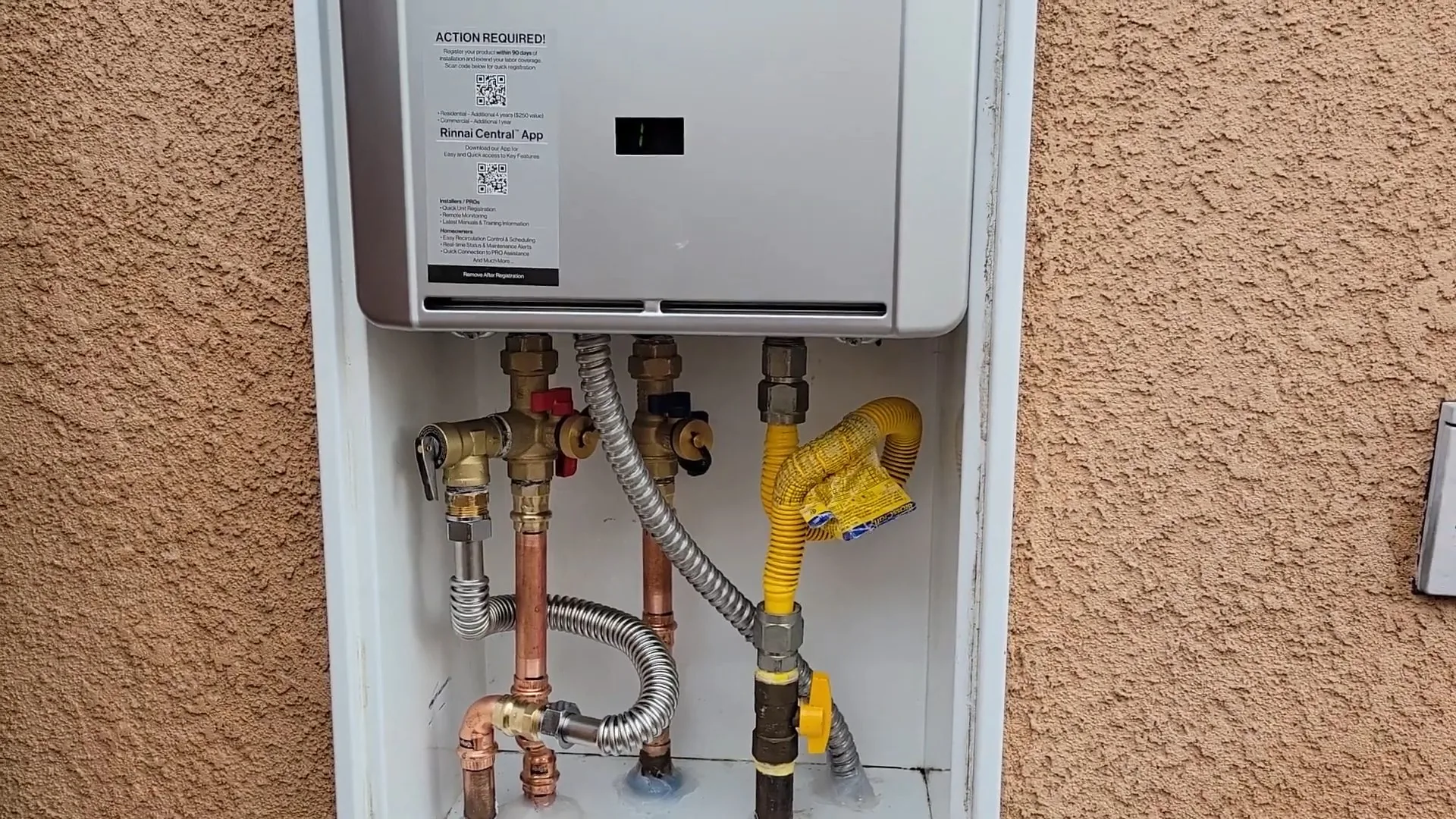
Tankless flushing, descaling and routine service
Minerals build up inside a tankless heat exchanger and restrict flow. Flushing circulates a descaling solution through the unit to dissolve that scale. Plumbers recommend flushing on a schedule, and hard water shortens the interval.
Arizona Water Company's 2024 water quality report for its Casa Grande system lists groundwater from wells as the source, but it does not list a hardness figure. Ask for a hardness test at your tap before choosing a flush schedule, because the number sets how often the unit needs it.
- Hot water runs lukewarm or cuts out mid-shower
- The unit shows a recurring scale or flow code
- Flow at the hot tap has dropped
- You cannot remember the last flush
Cleaning the inlet screens and checking the vent are part of routine maintenance, and they take little time compared with a repair.
Is your tankless water heater repairable?
Often it is. Troubleshooting starts with the display code and the symptom. Common repairs include replacing a flow sensor, a thermistor, an igniter or an inlet filter. Error codes point to the part, and a plumber reads them with the unit's manual in hand.
| Symptom | Likely cause | Typical answer |
|---|---|---|
| Lukewarm water | Scale on the heat exchanger or a weak flame | Flush and inspect the burner |
| No ignition | Igniter, gas supply or blocked vent | Test the igniter and the vent |
| Cold then hot cycling | Low flow or a failing sensor | Clean the screens, test sensors |
| Leak at the unit | Failed connection or cracked heat exchanger | Repair the fitting, or replace if the exchanger is cracked |
A unit that fails repeatedly near the end of its warranty may not be worth another part. Ask for the age on the data plate and the plumber's honest view.
Tankless unit showing a code or running cold
Give dispatch the brand and the code. It shortens the diagnosis.
Dead of night with no hot water? Installing a tankless unit
An installation is bigger than a tank swap. Tankless units draw a lot of gas in short bursts, so the gas line may need a larger diameter. They also need a rated vent, a condensate drain on high-efficiency models, and a dedicated power outlet.
A like-for-like swap is exempt under the City's administrative code only when gas, plumbing and electrical connections stay the same. A tank-to-tankless conversion changes those connections, so Building Safety, 520-421-8630, can confirm whether your job needs a permit.
The plumber should also size the unit to your hot water demand and confirm the gas supply can handle it before ordering.
Venting, gas supply and power for a tankless unit
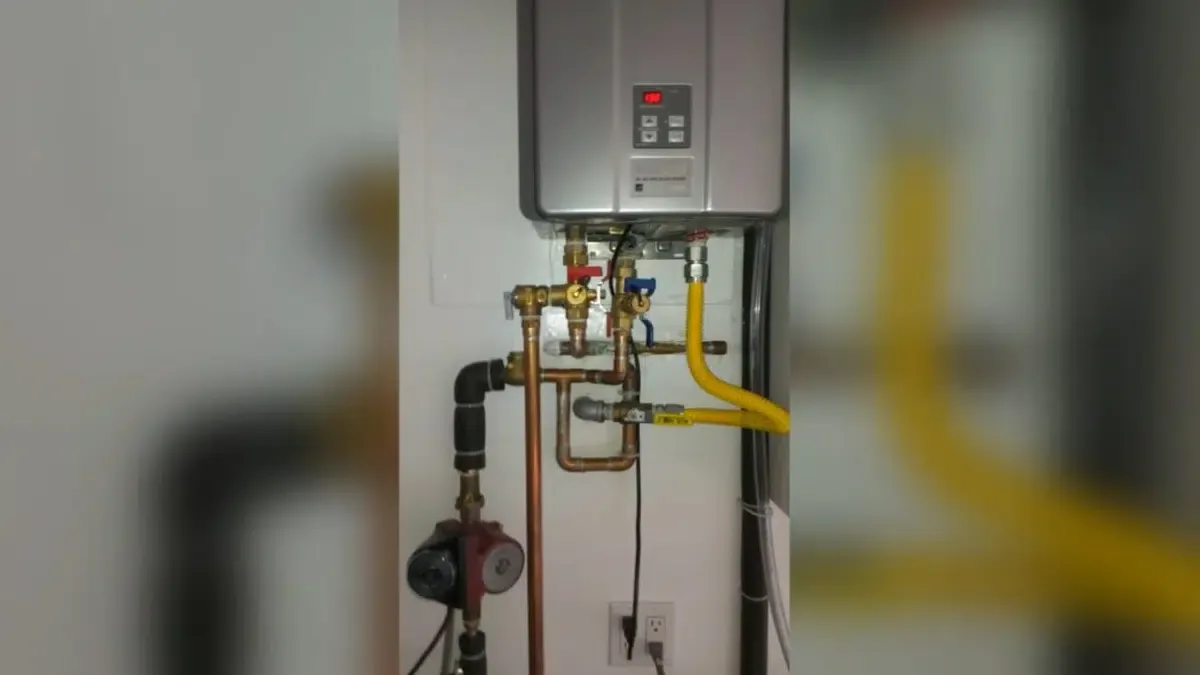
Three utilities meet at a tankless heater, and each can limit the project. The vent carries exhaust outside and must match the unit's rating. The gas supply must deliver enough volume at the moment the unit fires at full rate. The electrical outlet powers the controls, the fan and the igniter.
Before ordering a unit, a plumber checks the existing gas pipe size and the length of the run, then confirms there is a path for the vent. A route that looked simple on paper can fail at this step, and discovering it early saves a second trip.
Condensing models also need a drain for the acidic condensate, usually routed to a floor drain or a neutralizer. Ask where that drain will go before the unit is chosen.
Ready to convert from a tank
A conversion changes gas, venting and electrical needs. Call to book a plumber for an assessment.
Replacement and conversion from a tank
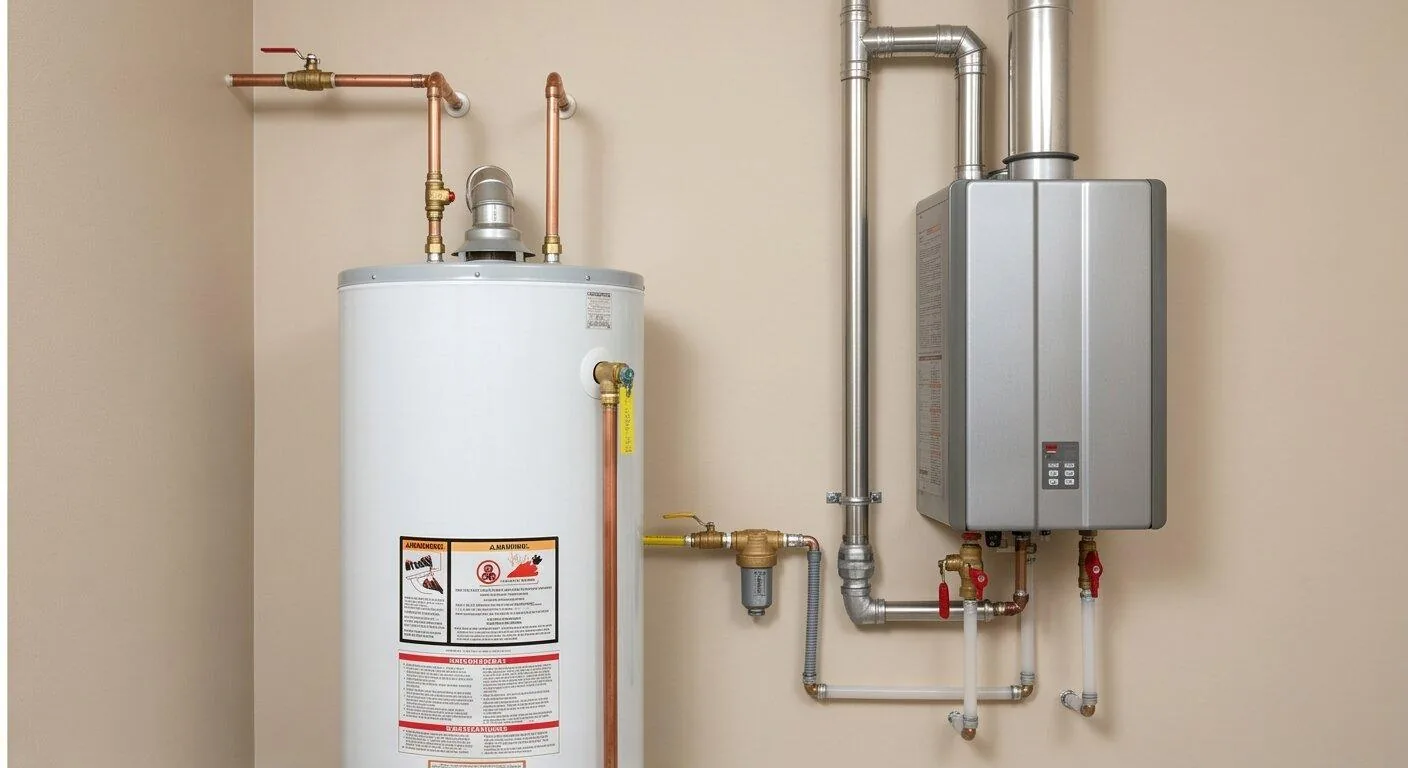
Converting from a tank frees wall or closet space and removes the standby heat loss of a stored tank. It also shifts the project to a larger scope: new vent, possibly a new gas line, and sometimes new electrical.
Compare a conversion against a straight tank swap on the tank swap details. Brands vary in parts availability and service network, so ask the plumber which models they can service locally.
Gas versus electric tankless units is a decision about your panel and your gas line. Electric tankless units need a large circuit, and many panels cannot supply it without an upgrade.
Tankless water heater questions
How do I flush or descale a tankless water heater?
A plumber closes the isolation valves, connects hoses to the flush ports and circulates a descaling solution through the unit for the time the maker specifies. Then the unit is rinsed and returned to service. Ask whether the inlet screens were cleaned as well.
How do I replace or convert a tank to a tankless?
Use the local facts first: connections change, so a permit question goes to Building Safety at 520-421-8630. Then the plumber sizes the gas line, plans the vent and sets the unit. Treat conversion as a project, not a swap.
What goes into a tankless water heater project?
The pieces are the unit itself, the gas line size, the venting, the electrical circuit and the permit. Each one varies from house to house, so every project is scoped separately by the plumber who inspects it.
Is a tankless or a tank water heater better in Casa Grande?
Picture a family that runs two showers and a dishwasher at the same time. A properly sized tankless unit keeps up, and a small tank runs out. For one or two people, a tank is simpler and easier to service.
Tankless trouble or a conversion to plan
Dispatch is open all night, and a licensed and insured plumber serving your area can start with the code on the display.
- Licensed and insured plumbers
- Same-day service when available
- 24/7 emergency dispatch